Sunday, July 8, 2012

How to get rid of Folger's coffee without drinking it and kill ants at the same time

Every time I walk to the orchard, I pass a large anthill.  I also notice a lot of ants on the peach tree that is closest to the anthill.  After passing the anthill about 15 times, I finally decided to do something about it.  And before I did anything, I went to google.  Always do your research, kids.  I searched "organic ant control" and clicked the first link.  I found this page:

http://doubledanger.com/living-green/10-tips-for-organic-ant-control

I'm a little uncertain as to whether some of these are truly organic, not that I really care, but maybe home remedies would have been a better description.  Vinegar, or relatively pure acetic acid, does not strike me as "organic".  But whatever.  One more reason to throw out the idea of "organic" and whatever else and focus on local foods that are grown with some transparency.  But, I digress..
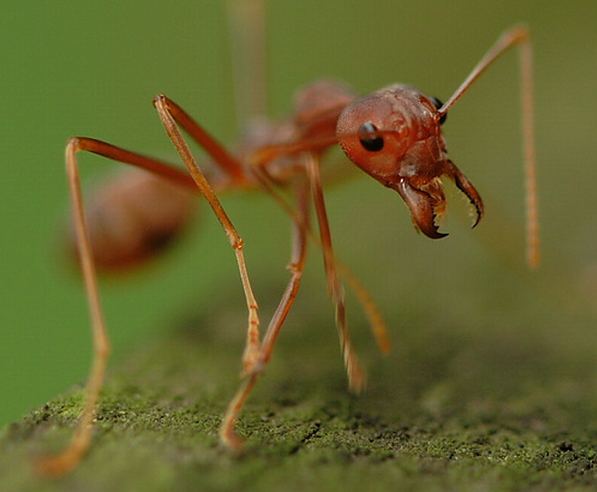


Ants.


I noticed that coffee was on this list.  We were cursed with a plastic can of Folger's someone had left at our house.  It came in handy when we ran out of good coffee - yeah, I'm a snob, whatever, I just like what my tastebuds tell me to - but even then it tasted like crap so it was small solace for not having a good cup of joe to start the day.  This seemed like the perfect use for the coffee.  Not to mention what the description said:

3. You can use coffee grounds, chili powder, cinnamon, peppermint or black pepper.  All deter ants and if you pour coffee grounds directly on an anthill, they will eat the coffee grounds and implode.

 OK, I'm sold.  I wanted to see some ants implode.  Even though the thought of spraying them with vinegar and watching them slowly be burnt with acid (but its organic, bro) sounded appealing, it wasn't quite on par with imploding.  Imploding is even more cool than exploding, because it sounds like exploding, but its different.  Its backwards exploding.  Its sort of elusive.  Anyone can make something explode with the right (wrong) stuff, but can you make it implode?  Yeah, I didn't think so.


So I sprinkled the Folger's poison all around the anthill and stood back to watch the show.  Like many things you read on the internet, it turned out that the effects of the Folger's were quite exaggerated.  Maybe there are ants dying underground somewhere, I don't know, but they sure seem to be having a good time to me.  Immediately they began picking up the coffee grounds and moving them inside.  There was no sign of any ill effects.  In fact, there seemed to be a sense of rejoicing.  They're probably all hopped up on caffeine now, worker ant efficiency has gone through the roof, and they're branching out and starting new colonies all over in my garden.  Great.  At least I got rid of the Folger's.

I checked on the anthill again the next morning to assess any potential destruction, thinking that maybe it takes awhile for the Folger's toxin to do its dastardly work.  I know it works that way on me.  About a half hour after I drink a cup I'm running for the bathroom.  Insects are physiologically quite different than humans, perhaps it takes longer to work on them. There could be imploded ants all over the place by now, right?  Sure.


Unfortunately, there was little sign of any coffee grounds and it appeared the party was still raging from the night before.  The Folger's didn't seem to have any effect on the ants.  However, I must declare that the experience was a success.  I got rid of the Folger's, and I found a much better way to kill ants: spray them with vinegar and watch them burn.  I also learned a valuable lesson: when your goal is to kill something, don't get all cute and try to make it implode.  Keep it simple.  Just spray it with acid and watch it burn.  The James Bond villains could have learned a thing or two from ants.

Saturday, July 7, 2012

Fresh caught fish: Healthy and delicious, but watch your water quality.

Fresh fish should be incorporated into any healthy diet... ok, let's settle down and just say its a very healthy form of protein.  Fish is lean, high in Omega-3 fatty acids (which are great for you and everything), and fairly easily obtained with the right skills and equipment.  Head to a water near you with a fishing pole in hand and collect yourself some of the highest quality protein that can be found.  I have found that the more fish I eat, the more weight I lose and the better I feel.  Besides, bringing home a mess of nice fish that will feed your family several times over just feels good.  Another bonus is that wild fish, or even the government stocked variety, are quite far removed from the industrial food machine.  This is real food, as wild as it gets, and a staple of our ancestors.

 I certainly know it felt good to catch this land locked, Missouri River chinook salmon within 15 minutes of catching the 26" walleye pictured below.  Those fish fed us many times, and they sure taste after some time in the smoker or frying pan.  


However, it is wise to be aware of the quality of the water that  your fish dinner comes from.  Heavy metals like mercury and arsenic and industrial chemicals like PCBs are your main cause for concern.  These pollutants accumulate in the flesh of fish, and large predators near the top of the food chain, like many game fish, have the highest concentrations.  Tthey've spent their entire lives absorbing the contaminants that accumulated in the fish they eat.  Urban industrial areas and waters downstream of mining activities are most likely to be high in these pollutants. Find out if any of your waters have high levels of pollutants.  You may want to eat less fish, keep only smaller fish, or not eat the fish at all.

Mercury can occur naturally in waters, usually in fluctuating lakes or large wetlands.  There is a small amount of mercury in all living things, and when lake waters rise killing large swaths of vegetation, mercury levels can also rise.  The mercury that accumulated over long periods of time in the soils and vegetation works its way up the food chain of the lake, accumulating in fish.  This phenomenon is not caused by pollution, but one should still be aware of local waters where this may be an issue. 

In the rivers of the midwest and great plains, where agricultural runoff predominates, high fecal bacteria levels may be seen, but these are not of great cause for concern.  Wash your hands when your done fishing and cook your fish thoroughly and you should be fine.  The bacteria does not effect the fish flesh.

For any information on the condition of your state's waters and fish life, contact your state environmental or game and fish agency.

Getting an early start with cold weather crops

This spring we decided to do a little experiment: Determine the frost tolerance of cold weather crops, such as cabbage, lettuce, radishes, spinach, and broccoli.  In our neck of the woods, central South Dakota, the average last frost date is around May 20.  We reasoned that we could get two crops out of each bed instead of one if we planted both spring and fall crops.  Most gardeners around here just plant their cabbage, lettuce, and other cold hardy crops along with their beans, peppers, and tomatoes.  We felt that we could improve on that system with a little learning.  And I must admit, a strong part of the reason for doing this was so we could get down to the business of growing plants a lot earlier.

We started our cabbage plants under our growlight setup, which I will write about in a later post, on - get this - February 15!  On February 19 we had sprouts, and a day later we started our broccoli.  We started our Napa (Chinese) cabbage on March 2, thinking it wouldn't be quite as hardy as the cabbage and broccoli.  It turned out to be a correct assumption.  Over the next two weeks, we also started Paris Island Romaine lettuce, Brussel Sprouts, leeks, and several herbs.

After hardening off, we planted our cabbages and broccoli in one of our chicken manure fertilized beds in the last week of April.  We experimented with milk jugs and plastic covers to deter frost.  The milk jugs didn't work well.  We had issues with aphids, and the plants with milk jugs were always worse.  The plastic was way better.  We watched the weather fairly closely and covered when it fell below about 27 degrees.  The plants endured mild frosts without flinching, and once they were established and healthy and the aphid population was knocked down by our garlic/soap spray, they endured frosts as cold as 23 degrees. We had a very mild spring,  however, and I am anxious to try this in a more normal (what's normal?!?!?!) year, when frosts will be more severe and blizzards are a possibility.


We had great success with early planting this year, with bountiful crops of Romaine lettuce, spinach, radishes, cabbage, and full broccoli heads before anyone else's plants were even thinking about heading out.  I encourage anyone to grow their cold season crops when its cold.  They grow way better, and don't mind a bit of frost.